Tampilkan postingan dengan label What. Tampilkan semua postingan

Conquer Empty Nest Syndrome

Empty Nest Syndrome is a feeling of great loss or sadness when a child leaves home to go to college or just to get out on their own.

If you are the child’s mother or mother figure, you may experience a true sense of loss, loneliness or even worthlessness. You may feel your job is over (its not!) and you child doesn’t need you anymore. (They do!)

For some, not being involved in your child’s everyday life and this is not just for mothers, but father too, may create a temporary identity crisis. You may find yourself depressed or anxious experiencing unaccountable tears or simply being highly emotional. You may wonder who you are and what are you worth, if not as a parent.

Believe it or not, this can truly be a significant and positive transition and period of growth for you!

Here are 5 secrets to ensure a healthy new life for you, without that much work:

  1. Renew your marriage vows.
    If not literally then figuratively. It just might be time to remember why you are together and all the wonderful times you had before kids. Do a date night. Join a dance club or some activity that you both enjoy and can do as a couple. Now is the perfect time to re-create your partnership and enjoy the life you both deserve, together, without children. Ask your partner, set a plan together. How will you use this time together? Single? No problem! What can you do to enhance the relationships you do have, now that you have the time? Write it down. Now follow through.

  2. Relish the time alone.
    You now have that peace and quiet that you have been wanting. Remember when they played their music too loud, their friends were too noisy and you wondered if there would ever be peace again? Well, there is, right now! What are you going to do? Read? Knit? Paint? How will you use your quiet time? Make a list.

  3. Reignite or begin new friendships.
    Solitary pursuits are great, but you need people in your life also. Think about the friendships that might have gotten put on the back burner while you were raising your children. Contact them! Tell them you are much more available and wanting to renew the friendship you once had. You also might want to add new friends to the mix. Get yourself out there. Socialize. Sign up for classes. Learn a new language or learn more about computers. Classes are a great way to do something you love and meet new people at the same time. How are you going to branch out now? Make a list.

  4. Broaden your horizons.
    Make your world bigger. When was your last trip or vacation? You don’t have to go around the world, just get out of town. Expand your world view. Pick a place and go. Explore. Your children are making their world bigger just by leaving home. Now it’s your turn. Where are you going?

  5. Find something meaningful and of value.
    Raising your children has been a full time job. It’s certainly been meaningful for both of you. Now they are gone and you need to replace that, you need another way to do your special work. What are your strengths? What are your skills? How can you use these to help others? Whether it’s through church, community, or more global, your gifts are needed. What are your special gifts? How are you going to us them?

Life is a journey. Not only are your children embarking on one, but so are you. Take a look at the big picture of your life. Having your children go off to lead their own lives is just one small piece. Consider this time of your life a step forward, a step in the right direction. You now have your very own life, so go lead it! <<
Kim Kirmmse Toth is a strengths based coach who works with boomers on transition. These may include re-crafting or re-careering so the work is a joy and not a dread. Go to www.redhotretirement.com and sign up for her free Top Ten Retirement Secrets!


by Kim Kirmmse Toth
Read More >>

11 Relationship Traps of Depression

Depression sets relationship traps for both partners. Everything can change quickly between two people, and it’s crucial to be able to spot these changes as soon as possible.

Here are 11 signs of the illness that seem perfectly designed to undo the bonds of closeness.
Humor, talking and doing things together, sharing special moments – they’re all gone.
In their place are avoidance, anger, blame and isolation.
Read More >>

Adam Weishaupt - Founder of the Order of the Illuminati

Who is Adam Weishaupt

He was born on 6 February 1748 in Ingolstadt in the Electorate of Bavaria. Weishaupt's father Johann Georg Weishaupt (1717–1753) died when Adam was five years old. After his father's death he came under the tutelage of his godfather Johann Adam Freiherr von Ickstatt who, like his father, was a professor of law at the University of Ingolstadt. Ickstatt was a proponent of the philosophy of Christian Wolff and of the Enlightenment, and he influenced the young Weishaupt with his rationalism. Weishaupt began his formal education at age seven at a Jesuit school. He later enrolled at the University of Ingolstadt and graduated in 1768 at age 20 with a doctorate of law. In 1772 he became a professor of law. The following year he married Afra Sausenhofer of Eichstätt.


After Pope Clement XIV’s suppression of the Society of Jesus in 1773, Weishaupt became a professor of canon law, a position that was held exclusively by the Jesuits until that time. In 1775 Weishaupt was introduced to the empirical philosophy of Johann Georg Heinrich Feder of the University of Göttingen. Both Feder and Weishaupt would later become opponents of Kantian idealism.

Adam Weishaupt is a philosopher and founder of the Order of Illuminati, a secret society with origins in Bavaria. Although raised in a Jesuit, in the end he deviated from the teachings of the order and on May 1, 1776, Adolph Freiherr Knigge with help, he founded a new order "Order of Perfectibilists" hereinafter known as the Illuminati. The Order has a mission to eliminate all the reigning monarch and religion. Adam Weishaupt is the most recognizable human figures among the Zionists and the Freemasons. There are not any revolution in this century unless associated with a name and his ideals. French Revolution, the Russian Bolshevik Revolution; always end up in the chain of thought and brilliant strategy of thinking.

History

At first, he was a Catholic priest who then raped a pioneer of the most persistent in opposing Christianity and other religions. Illuminati secret movement evolved into a network that "menggurita" due to the support of the Rothschild family. Meyer Amschel Rothschild (1743-1812) was a very dominant character of banking in Germany and is called a dynasty, as his descendants held the kingdoms of the world banking network in Europe with ambitions to dominate the world economy. One of Rothschild's famous sayings is:

"give me control over a nations economic, and I do not care WHO writes its laws."

Rothchild's motto is to give strength and encouragement to all members of the Illuminati do not miss any aspect of ushered them to the economic dictator is able to master and control the government in the corners of the world. In fact, James Abram Garfield is one of America's 20th president, who are also members of the Illuminati said:


"That whomever controls the money or economies of nation, They would control the nation too."

Adam Weishaupt was also a Jesuit, professor of law and taught at the University Ingoldstadt, Bavaria, Germany, until 1770. Disappointment himself against the dogmas of Catholicism led him out of his position as pastor and began to devote himself to the Zionist movement to establish a one world government  which is believed to uphold human dignity by abolition of all religion, except Satanism.

Jesuit priest and his position as abandoned because it was contrary to the thinking that is cosmopolitan and universality. This is the beginning of the formation order of Illumination.

"Weishaupt Whose views were cosmopolitan and Condemned the new WHO bigotry and supertision of the priest, established Opposing party in the university. This is the beginning of the order of the Illuminati or the enlightened." Said by Albert G. Mackey:

Founder of the Illuminati


Once out of the Catholic church, the church claimed he set up a new conspiracy network called Luciferian Conspiracy and The Synagogue of Satan. Added he, Satan is not a contemptible creature, but a force that symbolizes honesty, courage, and freedom. Satan as a creature has received God's forgiveness and redemption as evidence of evil to save mankind. These teachings were implanted to members of Illumination that Satanism is about the evolution of humanity and the promotion of freedom on individual and global scales. Many consider this is just propaganda to the illumination of the church

For five years he compiled a book entitled "The Novus Ordo Seclorum" which contains the concepts, doctrine, and the theory of global governance. The book was completed on May 1, 1776. As a tribute to him, May 1, used as a day of Communist celebrations around the world. According to Myron Pagan, strategic steps to realize his ambition Weishaupt wrote, among other things, as follows.
  1. Monetary and sex bribery was to used to Obtain the control of men already in high places in the Various Levels of all Governments and other fields of Endeavor.

  2. The Illuminati WHO were on the faculty of colleges and universities were to cultivate students processing exceptional mental ability and WHO Well-Bred belong to families with international leanings and recommend them for special training in Internationalism.

  3. All WHO Influential people were trapped to come under the control of the Illuminati, plus the students WHO had been specially educated and Trained, were to be used as agents and placed behind the scenes of all Governments as experts and specialists.

  4. They were to Obtain absolute control of the press so That all news and information Could be slanted to convince the Masses That a one word government is the only solution to our many and varied problems. They were also to own and control all the national radio and TV channels.

wikipedia
Read More >>

Next - Indonesia Is The Most Corrupt Country In The World (Public Skepticism)

Some people might think of this as a bad news, but considering where Indonesia had been on corruption scale worldwide this is certainly a good news for Indonesia as well as the Government.

Transparency International which is a global network including more than 90 locally established national chapters and chapters-in-formation, has released its 2010 CPI (Corruption Perception Index) which is a “degree to which corruption is perceived to exist among public officials and politicians”.

Since corruptions by nature are most of the time hidden, it is very hard to quantify the degree of corruption in a country. Transparency International overcome this by surveying businesses and individual in the targeted country. The 2010 CPI draws on different assessments and business opinion surveys carried out by independent and reputable institutions. It captures information about the administrative and political aspects of corruption.

Broadly speaking, the surveys and assessments used to compile the index include questions relating to bribery of public officials, kickbacks in public procurement, embezzlement of public funds, and questions that probe the strength and effectiveness of public sector anti-corruption efforts.

Indonesia has been steadily increase it standing from 1.9 in 2002 to 2.9 in 2010. While these increase are very small considering the CPI scale is 1 to 10, Indonesia is no longer the most corrupt country in the world, not even the most corrupt country amongst the Asean members.

Indonesia now ranks at no 110 out of 182 countries in terms of most corrupt countries in the world, sharing the ranks with Benin, Gabon, Bolivia and Solomon Island.

Other Asian countries that ranks below Indonesia includes Vietnam, The Philippines, Myanmar, Pakistan and Timor Leste.

Amongst the star on this year CPI compare to last year are Bhutan, Chile, Ecuador, FYR Macedonia, Gambia, Haiti, Jamaica, Kuwait and Qatar. While the following countries the Czech Republic, Greece, Hungary, Italy, Madagascar, Niger and the United States showed deterioration.

United States are again showing a decrease this year and now ranks at number 22. The so called “Beacon of Democracy” is now lagging behind countries such as Chile, Ireland, Qatar, Hong Kong and Singapore.

The top 10 cleanest country are
1. Denmark
2. New Zealand
3. Singapore
4. Finland
5. Sweden
6. Canada
7. Netherlands
8. Switzerland
9. Australia
10. Norway

While the tools employed by Transparency International to gauge corruption level in a country may not be perfect, at least for the time being Indonesian can feel good about themselves, especially with all the natural disasters that keeps coming as if we as a country are collectively being punished by the almighty.

Jakartauptodates.com
Read More >>

Indonesia Is The Most Corrupted Country In Asia Pacific

Indonesia is again falling down the corruption ladder amongst countries. A study released by Political and Economy Risk Consultancy (PERC), a consulting company based in Hongkong, to gauge corruption levels in investment destination countries in Asia Pacific region.
Read More >>

Indonesia's Economic Freedom in The 2012 Index - The 115th Ranking In The World

Indonesia’s economic freedom score is 56.4, making its economy the 115th freest in the 2012 Index. Its score is 0.4 point better than last year, with improvements in half of the 10 economic freedoms including monetary freedom and the control of government spending. Indonesia is ranked 23rd out of 41 countries in the Asia–Pacific region, and its overall score is below the world average.

Indonesia has undertaken wide-ranging reforms to address various structural weaknesses in the economy and to improve competitiveness. The economy has shown considerable resilience, weathering the global economic slowdown relatively well, and annual growth rates averaging over 5 percent have been achieved during the past five years. Recent reform measures have put greater emphasis on improving regulatory efficiency, enhancing regional competitiveness, and creating a more vibrant private sector through decentralization. Public finance has been well managed, and debt has been kept under control.

Despite the progress in economic restructuring, Indonesia’s growth potential remains fragile and hampered by inefficient legal and investment regimes that undermine entrepreneurship and job growth. Lingering political interference in the private economy discourages dynamic change, and pervasive corruption and a weak judicial system add uncertainty and risk, particularly to new economic endeavors.

Background


Indonesia is the world’s most populous Muslim-majority democracy. In the years since 1998, when long-standing authoritarian ruler General Suharto stepped down, Indonesia’s nearly 250 million people have enjoyed the blossoming of a wide range of political freedoms, and participation in the political process is high. President Susilo Bambang Yudhoyono has cracked down on corruption and has tried to encourage much-needed for­eign investment, but the weak rule of law remains a major impediment to attracting capital. As a member of the G-20, Indonesia is playing an increasingly important role in inter­national economic policy discussions.

Rule of Law


Property rights are generally respected, but enforcement is inefficient and uneven. The judicial system is not fully independent and remains vulnerable to political influence. In the absence of an efficient legal framework, court rulings can be arbitrary and inconsistent. Protection of intellectual property rights is not up to world standards, and the market for pirated goods has been expanding. Corruption continues to be pervasive.

Limited Government


The top income tax rate is 30 percent, and the top corporate tax rate is 25 percent. Other taxes include a value-added tax (VAT) and a property tax, with the overall tax burden amounting to 11.4 percent of total domestic income. Government spending is equivalent to 16.7 percent of GDP, and the budget deficit has come down to around 1 percent of GDP. Declining public debt has fallen below 30 percent of total domestic output.

Regulatory Efficiency


Despite notable simplification of licensing requirements, launching a business still takes more than the world average of seven days and 30 procedures. Overall regulatory efficiency is weak. Compared with other economies in the region, Indonesia’s rigid labor market imposes more regulatory costs on the creation and termination of employment relationships. Inflation has been modest, but government interference in the market still distorts prices.

Open Markets


The trade weighted tariff rate is 3.1 percent, but trade flows are constrained by costly non-tariff barriers. Although the country publicly welcomes foreign investment, many investors, foreign and domestic alike, face significant hurdles due to inconsistencies in the investment codes and erratic enforcement. The financial sector is dominated by commercial banks, four of which are state-owned. Capital markets are not fully developed.
www.heritage.org
© 2012 by The Heritage Foundation. All Rights Reserved.
Read More >>

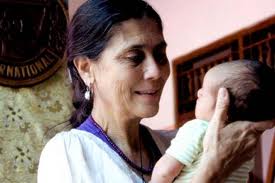
Ibu Robin Lim and Bumi Sehat Delivers for Poor Women in Indonesia


"I imagine a world in which all humans are born with an intact capacity to love, and I am willing to devote my life to making it happen.”

- Robin Lim -


Bali, Indonesia (CNN) -- At dawn, two women rise after sleeping on mats outside an Indonesian hospital. They've waited all night for a chance to see their newborn babies, whom the hospital is holding until the medical bills are paid in full.

"Holding babies until payment is common in Indonesia," said Robin Lim, a midwife who founded birthing clinics in Aceh and the island of Bali.

At this particular hospital in Bali, mothers who don't pay are allowed in twice a day to feed their baby and change their baby's diaper. Those fortunate enough to find the money may take their babies home. Others might relinquish their parental rights and place their babies up for adoption, Lim explained.

"You worry, 'Will I be able to deliver this baby safely into the world?' But you shouldn't have to worry, 'How will I pay for it?' " said Lim, 54.
"Mother Robin," or "Ibu Robin" as she is called by the locals, is working to change that with her Yayasan Bumi Sehat (Healthy Mother Earth Foundation) health clinics. These birthing sanctuaries offer free prenatal care, birthing services and medical aid to anyone who needs it.

And the needs are vast in Indonesia. The average family earns the equivalent of $8 a day, according to the International Monetary Fund, but a normal hospital delivery without complications costs around $70. A Caesarian section can cost more than $700.

Lim believes Indonesia's high maternal and infant mortality rates are caused in part by these costs, which many women cannot meet. In turn, their lives and the lives of their babies are at risk.
Video: Cord-burning ceremony

According to the United Nations Population Fund, three out of five women giving birth in South Asia do so without a skilled birth attendant on hand.

"The situation is bad ... babies are unattended, deliveries have become commercialized, and mothers die from hemorrhage after childbirth because they can't afford proper care," Lim said.

Do you know a hero? Nominations are open for 2011 CNN Heroes

Working as a midwife in Indonesia was not something Lim, a U.S. citizen and author of many books related to infant and maternal health, planned for her life. But after several personal tragedies, her life shifted in a new direction.

"In the span of a year, I lost my best friend and one of the midwives who delivered my child," said Lim, who has eight children. "My sister also died as a complication of her third pregnancy, and so did her baby. I was crushed, just crushed.

"But I decided not to get angry. I decided to become part of the solution. If I could help even one family prevent the loss of a mother or a child, I would do that. I would dedicate my life to it."

Lim and her husband, Will, sold their home in Hawaii and moved the family to Bali to "reinvent their lives."

For Lim, there was no second-guessing the destination. Raised in the Philippines while her father was stationed in Indonesia with the U.S. military, she says she "always felt happiest in Asia."

Once in Bali, Lim volunteered to help local midwives deliver babies in various homes. And as the demand for her services grew, she decided to receive formal midwife certification.

In 2003, with help from the Balinese community and donations from friends across the globe, Lim and her husband opened the first Yayasan Bumi Sehat clinic. At the clinic, there are midwives, nurses, housekeepers, a doctor and a chef.

A short time later, after the massive tsunami in 2004, a smaller, sister location was built in Aceh to care for displaced survivors. Combined, the two clinics have facilitated the birth of more than 5,000 babies.

Some Indonesian celebrities and expatriates choose Bumi Sehat to birth their children, and they often give donations. But Lim says 80% of the families served by the clinics can barely pay anything.

"Rock star or prostitute, everyone gets treated (like a) VIP at Bumi Sehat ... with kindness and respect," she said. "It's something to see a family come year after year, every time their mango tree gives fruit, and give a few mangoes to the staff to say thank you.

"No one gets rich being a midwife. The riches that you experience are the deeper values."

Part of these riches, Lim said, is the knowledge that so many people rely on the clinics, two of the few 24-hour businesses in Aceh and Bali.

"Everyone knows us," she said. "For expecting couples who don't have a phone to call us for help or for a ride, it's common for them to hop on their motorcycles in the night to get to the clinic, where they know someone will be there waiting. And if they have a special request for me, I'll get a call, I'll get up and I'll go do the delivery."

The love and attention is appreciated by the new mothers, who don't have alternatives for safe, accessible care.

"I had my first born ... in a different clinic," said Gusti "Ayu" Ketut Gerti, a 31-year-old who came to Lim for the birth of her second child in February. "There's a big difference between that experience and (Bumi Sehat). Here, I feel comfortable. Robin is very kind, very motherly.

"I do not have money, and I tell my friends to also come here. I wish there were more people like her to lift up the suffering of the poor people."

Lim hopes that Gerti's experience can become the standard practice worldwide.

"Does the world have a responsibility to all pregnant women, to each new baby? Yes," Lim said. "Each baby, each adult deserves a clean, healthy, loving environment. ... Those things are basic. Those are a human right."

Want to get involved? Check out the Bumi Sehat Foundation website at www.bumisehatbali.org and see how to help.
Ebonne Ruffins, CNN
Read More >>

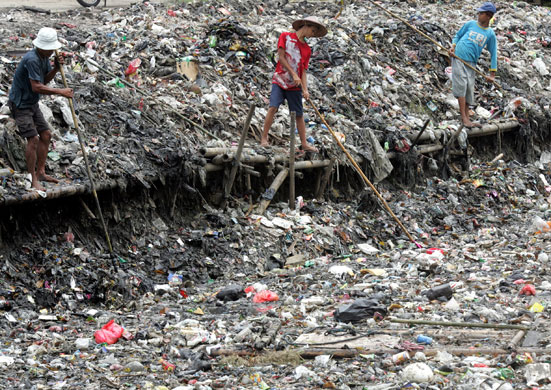
The Citarum of Indonesia Is The Dirtiest River in the World


What happens when nine million people throw their trash in a river, and corporations use it to dump hazardous waste? It becomes like the Citarum in West Java, Indonesia – choked with plastic, loaded with chemicals and human waste. A generation ago, the Citarum River was a peaceful waterway where wildlife enjoyed the clean, fresh water and villagers caught fish and made a living off the rice paddies.


The villagers can’t make money off of fishing anymore, so they’ve turned to picking through the trash that floats on the surface to find items that can be sold or traded. Rapid industrialization in the ‘80s is what led to this: more than 500 factories line the banks of the 200-mile river, many of them leaking textile treatment chemicals into the water. The trash that floats on top is the result of the lack of a trash pickup service in the area. All of the houses, factories, and other buildings along the river pour human waste into it for lack of anyplace else to put it.


Many people who live in the area still collect the water to drink, cook with and wash their clothes – they don’t have much choice, as it’s the only nearby source of water.


It’s unknown whether the Citarum really is the most polluted river in the world, since no study has ever been done to conclude such a thing. There are many other rivers that are also incredibly polluted, and many of them are located in Asia. Part of the problem is that wealthy countries like America pay poor Asian countries to take huge barges of our trash to dispose of. Electronics make up the bulk of it, and as today’s equipment becomes obsolete and we purchase tomorrow’s to replace it. Many of the world’s rivers may see fates similar to that of the Citarum River if we don’t begin a major overhaul of our sanitation systems, and help other countries with their waste management as much as we can.


 Stephanie Rogers
Read More >>

What is love, hate, and emotion?


Scientists have largely answered this question already, but as with most neuroscience, the details remain fuzzy. It is quite clear from decades of research that everything we feel, whether it be sensation or emotion, is mediated by the release of molecules, largely neuropeptides, between synapses in the brain.

Dopamine, serotonin, epinephrine, and a large cadre of other small molecules act as the signals between our brain cells. Our understanding is growing piecemeal, but as with the emergence of consciousness, soon we will hopefully be able to synthesize a complete model of emotion, including not only happiness, anger, sadness, joy, fear, and courage, but also spiritual experiences, amazement, and euphoria.

Daniel D. Brown.
lifeboat.com
Read More >>

Things Science Can Tell Us about Life, the Universe, and Everything


Ever since the evolution of the sensory neuron, organisms have been using these amazing peepholes into existence to direct the course of their lives. Now, humankind has elevated the role of these senses, and even created technological extensions of them, in order to find order and true knowledge of this Universe in which we exist. We are all scientists looking at the world through our own tiny peepholes, attempting to find our place within it.

We have sought to understand what we are made of, what drives our constant fight against entropy, and what defines us as thinking, living entities. Who knows what the future may hold or what constraints will be placed on our knowledge, whether through considered intellect and experience or through societal and cultural pressures? For the purpose of this article, I am ignoring any social, cultural, or religious implications or constraints that may face the endeavors of science. I simply ask: what questions remain about ourselves and our reality that science may theoretically be able to answer in the future?

Some of these can naturally be considered sub-questions of others, while some may have sub-questions already included within them. As with most scientific knowledge, it is all interconnected. It can be in any field of science you wish.


1. What exactly makes us different from our animal cousins?

With the completion of the human genome project, we now know that at the DNA level, we are 96–98% identical to our closest cousin, the chimpanzee. Scientists around the world are now scrambling to decipher what exactly in that DNA defines us as human and what separates us from the rest of our animal brethren. We have far yet to travel. It appears now that only about 1.5% of our genome encodes for proteins; the rest of it is often (and inappropriately) called “junk” DNA. We have deciphered the function of only a fraction of the protein-coding genes.

Furthermore, many of the differences between chimps and humans lie within this non-coding DNA. The coming years and decades will yield much knowledge as to exactly which genes have evolved in the hominin line, which regulatory regions within the non-coding sequences have changed, and which structures in the brain and other organs define our differences. We already have a sizeable list of genes that putatively separate us from apes. However, there is still much work to be done.

2. What is the nature of the mind? How do the emergent properties of consciousness arise from the underlying interactions of synapses and neural pathways in our brain?

This one is going to take a while. Eventually, however, we must assemble a complete working knowledge of all genes and all of their functions and interactions. We will combine our knowledge of molecular biology with our knowledge of cell biology. Over this synthesis, we will layer our understanding of neuroscience and cognitive psychology.

We must take into account the existence of memory, emotion, learning, sense perception, and every other integral process or function of the brain. The question is: will the underlying structures and functions of all microscopic and macroscopic aspects of the human brain allow us to predict and explain the emergence of consciousness? Only time and science may tell.

by Daniel D. Brown
lifeboat.com
Read More >>

Antasari Azhar, from Hero to Zero?


Antasari: "I will fight justice until the end.I did not commit murder"

Antasari still locked up in prison without the truth clarity of law in Indonesia. Antasari had filed new evidence of innocence. But all that pass like the wind and disappeared.

flashback to how and what happened with Antasari, referring to writing of Maretha Tri Utami (division of Law); Welly Anggara (division of English Club); M. Reza Firdausi (division of News Letter).

A stunning issue which has been very hot happened this latest months, competes the newest cases such as Susno Duadji’s case, Bibit Chandra’s case, high living rate jail of “Ayi”the mother of Police Department and Judiciary conspiracy, terrorism acts to kill present Indonesian President, Malaysia-Indonesia heat and so on. The Antashari which take long way of court procedures until now. It’s been way far since months ago stroke the justice situation in Indonesia, and now still goes on, especially the reveal of the truth of the case. The case that hits the former KPK director Antashari Azhari is really unbelievable, now the corruptors’ hunter has been a suspected.

It is right we have known him and KPK which he ruled is at the front line of the war against corruption so that really makes institutions, agencies and individuals who have been robbing this nation wealth will not always feeling safe and peace. But for us to know, when we carry actions for good, surely that all around us will appear enemies who then unite to demolish the truth.


The existence of KPK is really needed to take corruptions into court since this problem will be visually seen to be dragging KPK which was before a place for Antashari to lead, means there will be negative and sarcastic sounds about this institution existence. Beside that this can be also a study for us that the destruction of someone is really close to three things; throne or crown, wealth, and women. And we surely all realize that.

The enemy of truth will always using all ways to get everybody who supports the truth to go down. Hopefully the society can be aware to safe the existence of KPK from actions to break KPK down. Hopefully the justice can be built, but if this is only a conspiracy hopefully it will be then break opened so then a name will go down because of it.

The police department and the judiciary institute must be quick to overcome this case. Yes we hope “this certain woman” will appear because at least this woman’s confession will be the key to open the case which is actually the case of the killing of Mr. Nasrudin which involves Antashari Azhar, because it can be said that almost all part of the society are not all believe the involve of Antashari Azhar on this murdering case is only because of the love triangle.

If this is a conspiracy, the creator of this case is very smart, neat and full of perfect considerations, means he studied every single action and activity of the target to kill. A man will become a hard shield for his family, means if the part of the family (parents, son, daughter, and wife) feels badly threat, surely the family head will put his body in front to defend his family, means enemies will use these tricks to make their target surrender.

If Antashari Azhar then punished dead, at the same time the other doer do not get the same punishment, yes surely this is a high quality conspiracy which involves people who want to make revenge and fell threatened by the existence of KPK nowadays to the demolition of corruption.

It is true that a man will be very weak in front of woman, because a man can be success and dropped down because a woman. Playing with fire is exactly dangerous since the condition connects with pleasure, especially sex and women, this is the root of a problem.

This is an example of prove that anybody will always fall into the valley of insult, means when we get into the top position of an authority, we must also getting ourselves to our Mighty Creator. The tighter we keep a carcass inside a box, still then we can smell it.

The law then should be standing and act to born justice without considering whether the doer is a high positioned person, wealthy or everything else who can tackle the judiciary bravery to take on criminals to court. This will be a good achievement for the police department to examine this case which involves public authorities. The police department should be very careful and putting justice in front of everything since the authority especially in Indonesia was pointed very bad, full conspiracy, corruption, and also nepotism. This minded should be changed so that society will again lean on their trust to the institution.

Nasrudin, before was a success businessman. He is very talented in lobbying high positioned people of many institutions and it’s the main key of his great career. One of them, surely Antashari. Antashari picked Nasrudin as his closest friend, and always accompanied Antashari playing high quality golf field. Rumour says there are two things which became the reason why Nasrudin was killed. First, Nasrudin had the evidences that Antashari also involved at some cases followed by money politic. Then, Antashari planned to murder him. Second, Nasrudin was very angry knowing that Antashari did dishonest relation to his third wife, Rani, since Rani was working as Antashari’s caddy. And Nasrudin threatened Antashari to open Antashari’s scandal to the public.

Then what happened, Nasrudin while on his way to a certain place driven by his driver was then blocked by a car in front of his car so then his car should drive slowly. This condition then made two men with a motorcycle had a good range and a right target shooting Nasrudin with a hand gun, twice, right at Nasrudin’s left side head. He died right on his seat and the driver could not do anything because in the danger of being shot too. It is believed that the car which blocked Nasrudin’s car was driven by a same group of the shooter as a package. The case then improved and catches Antashari as a suspect, and some of his “right hands” connected to the killing who also includes the shooter.

Hopefully the present of Rani who has been waited by the society will explain everything, but all these will not 100% guarantee the real truth because there will be also negative forces which effect Rani’s existence. Rani now is protected by the police department, also her family because she is the fundamental item for the case.

A Conspiracy to make a hero to be zero?

A zero to be hero indicates a subject whether individual or group in former are people that fall down in a big mistake or maybe no one becoming into a person or group that suddenly become hero because of certain achievements. What about a sentence called “from hero to zero?”. Ironically this happens to their who makes big achievements and benefits to others but then becoming losers. Sometimes losers of blunders, things that are actually not that qualified or complicated but really have big negative effects of someone’s positive earns whether for himself, his community or also his nation.

A conspiracy generates the meaning of efforts to damage someone’s or group’s achievements, respect and dignity by doing over bordered regulation in a certain country. This involves a systemized and well organized corruption of truth and broken authorization, powered by high positioned people in certain level of governing. They reach all kind and a type of ways just to break down someone’s or group’s position.

Implying to the case of Antashari there are things that might be a realistic assumption to solid a saying that there is conspiracy during the case of Antashari.

First, is that the executors of Nasrudin, Director of PT Putra Rajawali Banjaran (PRB) on 14 Maret 2009 after golfing at Modernland Golf Yard Tangerang, are people that are considered well trained to murder Nasrudin. This is shown by the right precision of two bullets that hit Nasrudin’s head. This is a kind of neat and clean murder act that surely done by well trained people.

Second, this might be a conspiracy of making Antashari to stay away from the corruption practices that happened and done by people inside the government. As we know since KPK was borned, Antashari is the fighter of capturing corruptors all over Indonesia.

And don’t forget a businessman called Sigid Haryo Wibisono and former Resort Police Director Williardi Wizar. They are thought to be in the circle of Nasrudin murder. But how could a case that was issued started from a triangle love and then involved those people mentioned? Who knows?

And last why Antashari should spend about 500 million rupiahs to execute Nasruddin since there might be many paid killers that are more value-able or cheaper.

A consideration whether there is conspiracy flows quick and hardnot only touching the sleeping case of Antashari. It also reaches Bibit-Chandra and Susno Duadji. A legal letter of Surat Ketetapan Penghentian Penuntutan (SKPP), raised and stopped the identification of corruption that involved Bibit-Chandra, leaders of KPK. Medias highly speak that this stopping is correct since there are big holes and lies of truth. And the threat of jail for Bibit-Chandra is slowly decreased, especially when believed that law argumentation to jail them by Kapolri Jenderal Pol Bambang Hendarso Danuri is weak of law offence. What is a bit weird is that the case stopped when the identification had not been completed yet. The case was stopped luckily powered by the massive support of Indonesian society who believed they were not guilty. Funny how then Susno Duadji who surely reveal thet truth and evidences of corruption practices in the body of Police Department of Indonesia, then the case has not been stopped even also the big community of Indonesian people considered him of not guilty.

Susno but then accused back. Many believe this is a conspiracy of breaking the existence of Susno of blowing the bad sides of Indonesian Police Department. He is accused for internal ethic code breaking such as not attending the regular work day, attended the Antasari court and went abroad without legal permit. A man who is pointed to be a hero now goes to be “zero”.

From cases mentioned, was there conspiracy? Has been there conspiracy? Will this be revealed as conspiracy? The last statement is a bright door that we all have been waiting for to law enforcement. How could we all believe this country of powering the justice, if there are epidemic organized conspiracies inside? Covered by corruption, collusion, human rights killing, and discriminative law treatment, there is one, starts from now and surely starts from us as law students. We should have not be students that learn and practice and love law and can only make critics to how the nation governed, who then someday when we sit on some certain authorize law and power position, we forget what we learned when we were students, just because of money, existence, and the worst of all, include free irresponsibility of life.

source:
alsaindonesia.org
baliholidayinfo
Strodong
Read More >>

The Reality Of Indonesian Justice


Indonesians dump flip-flops at police station in symbol of frustration over uneven justice

Indonesians have found a new symbol for their growing frustration at uneven justice in their young, democratic nation: cheap, worn-out flip-flops.

They have been dropping them off at police stations all over the sprawling archipelago to express outrage over the arrest and trial of a 15-year-old boy for lifting an old pair of white sandals from outside a boarding house used by police in northern Indonesia.

"This is insane," said Titis Anissa, a high school teacher in the capital, Jakarta, noting that government officials found guilty of plundering state coffers get off with a slap on the wrist. "And a young, poor boy takes a pair of $3 sandals? Enough already!"

The boy snatched the shoes while he and several friends headed home from school in Palu, the capital of Central Sulawesi province, in November 2010.

He was later interrogated and badly beaten by three officers, and faces up to five years in prison if found guilty -- the same sentence given to many terrorists, drug pushers and rapists.

He will appear Wednesday before the court in Palu for the second hearing of his trial, which opened last month.

Indonesia has made tremendous strides since the ouster of longtime dictator Suharto just over a decade ago, implementing sweeping reforms that have freed up the media, scrapped oppressive laws and given citizens the right to directly pick their leaders for the first time.

But the judicial system remains a weak point. The flip-flop case has captured headlines since the trial began and is one of the most popular trends on social networking sites like Facebook and Twitter.

Thousands have joined in the sandal donation protest.

A batch of 1,000 flip-flops will be given to Sgt. Ahmad Rusdi Harahap, owner of the stolen shoes, as "compensation," said campaign organizer Budhi Kurniawan.

The boy, not identified by name because of his age, said he found the dirty old flip-flops near a garbage bin outside the boarding house. Six months later, he was summoned by Harahap, who accused him of theft.

"At first, I didn't understand what he was talking about," he told The Associated Press. "I'd forgotten all about those sandals."

"He called a few of his colleagues and they started beating me up, hitting me with a piece of wood," he said. "I fell into a steep trench. My legs were bleeding."

The boy said the officers made him promise to give each a new pair of sandals, but his father, after seeing the cuts and bruises on his son's body, decided to report the men to their superiors.

Harahap, who along with the other two officers is facing charges of violating police ethics, responded by taking the teenager to criminal court.

It was a move Andreas Harsono, of the New York-based group Human Rights Watch, said was obviously "excessive" and vindictive.

Ayu Laksmi, a Balinese artist, brought 10 pairs of sandals to the National Commission for Child Protection on Tuesday to show her displeasure.

"This just goes to show, once again, that our laws discriminate," she said. "It's tough on the poor and weak when it comes to those with money or power."

The teenager is not the first minor to face trial over a small criminal offence.

Last year, a 14-year-old boy was brought to court after spending three weeks in a Jakarta prison for allegedly stealing a $1.15 cellphone voucher.

Judges finally dropped the charges, arguing the investigation of the case was "defective."

The Associated Press
Read More >>

Biography of Robin Lim - Bumi Sehat Medical Care


Poll to determine the winner of the CNN Heroes 
will still be open until December 7, 2011 at 

Who's Robin Lim

Robin Lim,
born 1956 Heritage;  has a diverse genealogy, which mixes Native American, Indonesian, Chinese, Philippine, German and Irish elements. She lives in Bali with her husband Wil Hammerle, and has seven daughters and sons, as well as one niece.

Robin’s support and inspiration is her family, husband Wil, and seven children. Lim’s Filipino Grandmother, Vicenta Munar Lim, was a traditional birth attendant in the Baguio mountain region of Luzon, Philippine Islands. Before during and after WWII she served as a healer and baby catcher for her people. Just as Lim’s "Lola" passed her family tradition of hands-on healing down to her, Lim is already training her granddaughter, Zhouie, in the art and passion of midwifery and service to humanity

Robin Lim is a mother, grandmother, author, poet, midwife and educator who lives in Bali with her husband and children. Ibu (mother) Robin is a Certified Professional Midwife, with the North American Registry of Midwives and Ikatan Bidan Indonesia.

She is a founder and executive director for Yayasan Ibu Bumi Sehat Birth Center in Bali. Lim splits her time between the birth center and the Tsunami Relief Clinic in Samatiga Aceh, Sumatra. Along with receiving babies, Ibu Robin is an author. Many of her articles, stories and poems have been published in Midwifery Today magazine and The Birthkit newsletter.

Following the December 2004 Tsunami disaster, Robin moved to Banda Aceh (Sumatra), an area that was torn also by ethnic and religious conflicts. Robin has been supporting survivor women, not only by providing them with health care and birth services, but also by helping them in the emotional process, the reconstruction of the social network, and mutual help relationships among people.

Robin headed to Yogyakarta right after the area is shook by an earthquake few months ago. There, she established an emergency unit, which not only provides health assistance but also trains the community to be able to start living a healthy lifestyle.

Bumi Sehat Medical Care

Robin Lim, chosen because of his dedication to provide the service free of pregnancy and childbirth in women who are less able to Indonesia since 1994. As a form of dedication, he established a foundation named Bumi Sehat Bali as a manifestation of his dedication in 2003 and until now has helped thousands of women in Bali and Aceh.

Robin Lim Receives the 2006 International Alexander Langer Prize. The Scientific and Guarantee Committee of the Alexander Langer Foundation, Bolzano, Italy/Italia, has decided to award the International Alexander Langer Prize for 2006 to Ms. Robin Lim, founder and advisor for the non-profit organisation Yayasan Ibu Bumi Sehat (Healthy Mother Hearth Foundation), based in Bali, Indonesia.

Robin Lim is a Certified Professional Midwife, with the North American Registry of Midwives, and recently joined the Indonesian Midwifery Association. She is Executive Director of Yayasan Bumi Sehat (Healthy Mother Hearth Foundation) and Health Director of the Tsunami Relief Clinic in Aceh. The Foundation started by Robin has recently built a small but well qualified and friendly clinic, maternal and child health centre and birth centre.

Robin Lim is called “barefoot midwife” for her efforts in promoting healthy pregnancy, gentle childbirth, serene welcoming of the newborn, and fighting poverty and malnutrition.
Following the best Western as well as Non-Western traditions and practices, Robin directs her gentle and friendly efforts to promoting traditional knowledge and herbal medicine and, most importantly, mobilising pregnant women, new mother’s human and spiritual resources in caring for themselves and their child, helping them to face the moments of weakness and spiritual vulnerability with emotional strength.

“We believe – Robin wrote – that a gentle and healthy birth is the foundation of a beautiful life. Peace in the world can be fostered starting today, one baby at a time”.

On September 29th, 2006, Robin Lim will receive an award in the frame of the annual meeting “Euromediterranea” dedicated to Alexander Langer, in Bolzano, Italy/Italia.
Robin also will be received by Mr. Bertinotti, the Italian Parliament’s President, on October 5th 2006 in Italy.

Robin Lim, who is now settled in Ubud, Bali with his family that also has written several bestselling books related to childbirth. Lim also has won many awards for his dedication to it.
The midwife member of the North American Registry of Midwives and the Association of Indonesia Perbidanan it with 9 other name will receive prize money of U.S. $ 50 thousand, and his story will be narrated by renowned celebrity. CNN Heroes one of the lucky ones will get cash grants of U.S. $ 255 thousand to help their contribution, and was named the CNN Hero of the Year.

Note

At dawn, two women rise after sleeping on mats outside an Indonesian hospital.
They've waited all night for a chance to see their newborn babies, whom the hospital is holding until the medical bills are paid in full.

"Holding babies until payment is common in Indonesia," said Robin Lim, a midwife who founded birthing clinics in Aceh and the island of Bali.

At this particular hospital in Bali, mothers who don't pay are allowed in twice a day to feed their baby and change their baby's diaper. Those fortunate enough to find the money may take their babies home. Others might relinquish their parental rights and place their babies up for adoption, Lim explained.

"You worry, 'Will I be able to deliver this baby safely into the world?' But you shouldn't have to worry, 'How will I pay for it?' " said Lim, 54.

"Mother Robin," or "Ibu Robin" as she is called by the locals, is working to change that with her Yayasan Bumi Sehat (Healthy Mother Earth Foundation) health clinics. These birthing sanctuaries offer free prenatal care, birthing services and medical aid to anyone who needs it.

And the needs are vast in Indonesia. The average family earns the equivalent of $8 a day, according to the International Monetary Fund, but a normal hospital delivery without complications costs around $70. A Caesarian section can cost more than $700.

Lim believes Indonesia's high maternal and infant mortality rates are caused in part by these costs, which many women cannot meet. In turn, their lives and the lives of their babies are at risk.

According to the United Nations Population Fund, three out of five women giving birth in South Asia do so without a skilled birth attendant on hand.

"The situation is bad ... babies are unattended, deliveries have become commercialized, and mothers die from hemorrhage after childbirth because they can't afford proper care," Lim said.

Working as a midwife in Indonesia was not something Lim, a U.S. citizen and author of many books related to infant and maternal health, planned for her life. But after several personal tragedies, her life shifted in a new direction.

"In the span of a year, I lost my best friend and one of the midwives who delivered my child," said Lim, who has eight children. "My sister also died as a complication of her third pregnancy, and so did her baby. I was crushed, just crushed.

"But I decided not to get angry. I decided to become part of the solution. If I could help even one family prevent the loss of a mother or a child, I would do that. I would dedicate my life to it."

Lim and her husband, Will, sold their home in Hawaii and moved the family to Bali to "reinvent their lives."

For Lim, there was no second-guessing the destination. Raised in the Philippines while her father was stationed in Indonesia with the U.S. military, she says she "always felt happiest in Asia."

Once in Bali, Lim volunteered to help local midwives deliver babies in various homes. And as the demand for her services grew, she decided to receive formal midwife certification.

In 2003, with help from the Balinese community and donations from friends across the globe, Lim and her husband opened the first Yayasan Bumi Sehat clinic. At the clinic, there are midwives, nurses, housekeepers, a doctor and a chef.

A short time later, after the massive tsunami in 2004, a smaller, sister location was built in Aceh to care for displaced survivors. Combined, the two clinics have facilitated the birth of more than 5,000 babies.

Some Indonesian celebrities and expatriates choose Bumi Sehat to birth their children, and they often give donations. But Lim says 80% of the families served by the clinics can barely pay anything.

"Rock star or prostitute, everyone gets treated (like a) VIP at Bumi Sehat ... with kindness and respect," she said. "It's something to see a family come year after year, every time their mango tree gives fruit, and give a few mangoes to the staff to say thank you.

"No one gets rich being a midwife. The riches that you experience are the deeper values."

Part of these riches, Lim said, is the knowledge that so many people rely on the clinics, two of the few 24-hour businesses in Aceh and Bali.

"Everyone knows us," she said. "For expecting couples who don't have a phone to call us for help or for a ride, it's common for them to hop on their motorcycles in the night to get to the clinic, where they know someone will be there waiting. And if they have a special request for me, I'll get a call, I'll get up and I'll go do the delivery."

The love and attention is appreciated by the new mothers, who don't have alternatives for safe, accessible care.

"I had my first born ... in a different clinic," said Gusti "Ayu" Ketut Gerti, a 31-year-old who came to Lim for the birth of her second child in February. "There's a big difference between that experience and (Bumi Sehat). Here, I feel comfortable. Robin is very kind, very motherly.

"I do not have money, and I tell my friends to also come here. I wish there were more people like her to lift up the suffering of the poor people."

Lim hopes that Gerti's experience can become the standard practice worldwide.

"Does the world have a responsibility to all pregnant women, to each new baby? Yes," Lim said. "Each baby, each adult deserves a clean, healthy, loving environment. ... Those things are basic. Those are a human right."

Want to get involved? Check out the Bumi Sehat Foundation website at   www.bumisehatbali.org  and see how to help.

Tel: +62 361 970002 or Ibu Robin 08133833825, email or visit our website http://www.bumisehatbali.org/


source:
news-websites.info
edition.cnn.com
midwiferytoday.com
amazon.com
mbulle.com
olidea.com
Read More >>

Eid ul Fitr in Indonesia 2011


Lebaran or Eid ul Fitr is the last day of Ramadan where the Muslims visit their friends and relatives to ask for forgiveness for any wrong they have done in the previous year. Traditional food is eaten in the social gathering, followed by the exchange of gifts and visits to a recreational park. Jakarta, Java, Sumatra and other parts of Indonesia looks very bright and colorful on this day. This is an ideal time to experience most popular Indonesian Eid ul Fitr. The government prevents vagrants, beggars and other social undesirables from migrating into the city. The Lebaran celebration and festive gathering, prolongs for a week or two, where even non-Muslim are invited by the group.

The holy month of Ramadan and the social day of Lebaran, are the popular picks by international tourists. These events are really a great and an amazing occasion’s to witness.

Hari Raya Idul Fitri in Indonesia - Eid ul Fitr is the most significant Muslim festival in Islamic Calendar. It is celebrated on the end of holy month of Ramadan. During the Ramazan, Muslims offer prayers in Mosque in large numbers. They also observe fasting throughout the month of Ramzan just before these Eid celebrations. The month of Ramazan holds a deep significance in Muslim history as the holy book of 'Quran' was revealed during this month. During this month, Muslims fast from sunrise to sunset everyday for a month. Most parts of the Southeast Asia celebrated this great occasion of Eid as Hari Rya Aidilfitri.

Eid is celebrated on the first day of Shawwal. Shawwal is the tenth month in holy Islamic Calendar. Families begin this Eid morning with a special Prayer also known as Eid Prayer. This prayer offers a special thanks to god for the strength and discipline received during the holy month of Ramadan. People distribute sweets and children wear new clothes on this great Muslim festival known as Eid.

The people of Indonesia celebrate Eid ul Fitr with great enthusiasm and peace. The message of brotherhood is spreader all throughout the country. Muslims people wear new clothes and distribute sweets to mark this auspicious festival in Islamic calendar. On this great occasion of Eid ul Fitri, markets all through Indonesia are decorated and people enjoy shopping with great fun.

Banks, private offices and government centers are closed for almost one week in Malaysia, Singapore and Indonesia.

aulia-e-hind
indonesiatravel
searchindonesia


Read More >>

Ramadan in Indonesia


Ramadan in Indonesia. the Islamic month of fasting, is the most awaited Indonesian festival which attracts tourists from all corners of the world. The festival continues for 29 or 30 days, the dates of the 9th month of the Islamic calendar (Hijrah), based on lunar cycles. The last day is Eid ul Fitr (commonly called as Lebaran), which an important and most significant day in the Muslim calendar.Its Arabic meaning is ‘to become holy again’. Indonesia celebrates Ramadan and Eid ul Fitr with great pleasure, colors and glory, which also records the highest tourist count in Indonesia.

Ramadan:
Ramadan is the holy month where large number of Muslims offers prayers in Mosque. This month is spent fasting everyday from dawn to dusk. This month is the time to reinforce bond between the faithful individuals and the Almighty. This month was the time when Angel Gibril, revealed Allah’s will to Prophet Mohammed, who then got an inspiration to write the verses on the Holy Quran.

Other definition, Ramadan is a special time for Muslims across the world. Falling in the tenth month of Shawwal, the Islamic calendar, it was at this time of the year when the Angel Gibril revealed to the Prophet Mohammed Allah’s will and so were written the very first verses of the Holy Qur'an. The month of Ramadan is spent fasting from dawn to dusk everyday - it is a time to introspect, reflect and reinforce the bond between the Almighty and the faithful.

During Ramadan, adults who have reached the puberty age are expected to fast. Children, the sick, breastfeeding or pregnant women, travelers, women in periods, mentally ill or those suffering from long-term illness are not expected to fast. Fasting is an obligation and one of the five pillars for a devoted Muslim. They believe that it helps in developing self control as well as enhances spirituality. During the fasts, one should diligent in prayer and charities. They should strictly avoid bad language, lying and getting angry. In day time they must refrain from drinking, eating, smoking and marital relations.

In Indonesia, the group of young people walks around the neighborhoods beating the drums to awaken the faithful, early in the morning for prayer and to have meal before the sunrise. One could also hear the prayer sounding from nearby mosques. The fast ends after sunset, upon the call of prayer from nearby mosque or bedug drum on the television. Fast is broken usually with sweet snacks and drinks. Special food is prepared by various families and groups for this occasion and is eaten in a community fashion. Common prayer at mosques or social gatherings is usually held at 7:30 p.m. The monthly schedule is published in newspaper or other social Medias.

Ramadan culminates in the festival of Eid-ul-Fitr - when the period of restraint ends in an extravagant explosion of joie de vivre, festivities and feasting. The devout gather together to offer Eid prayers and greet each other in a rejuvenated spirit of camaraderie. Eid is a day of thanksgiving, of peace, of remembrance, of charity and of forgiveness, celebrated amidst great jubilation once the delicate silver sliver of the crescent moon has been sighted. The festival of Eid-ul-Fitr forges fraternal and communal love, self-discipline and commitment to Allah.

            Ramadan Dates                         

2011  August 1
2012  July 20
2013  July 9
2014  June 28
2015  June 18
The dates given here may vary as these are based on lunar calendar.

aulia-e-hind
indonesiatravel
searchindonesia


Read More >>

Eid ul-Fitr Is Muslims Celebration

Eid ul-Fitr, Eid al-Fitr, Id-ul-Fitr, or Id al-Fitr (Arabic: ‎عيد الفطر ‘Īdu l-Fiṭr), often abbreviated to Eid, is a three-day Muslim holiday that marks the end of Ramadan, the Islamic holy month of fasting (sawm). Eid is an Arabic word meaning "festivity," while Fiṭr means "original nature," implying the restoration of one's best human composition. The holiday celebrates the conclusion of the thirty days of dawn-to-sunset fasting during the entire month of Ramadan. The first day of Eid, therefore, falls on the first day of the month Shawwal.

Eid-ul-Fitr Salat (Namaz in Persian) is a Sunnah muak'kad (strongly recommended, just short of obligatory) or mandoob (preferable) – depending on which juristic opinion is followed – Islamic prayer consisting of two raka'ah (units) which is generally offered in an open field or large hall called an Eed-gah. This salaat or prayer, can only be performed with Jama’at (i.e., in congregation) and has an additional extra six Takbirs (raising of the hands to the ears while saying Allahu Akbar (God is Great), three of them in the beginning of the first raka'ah and three of them just before ruku' in the second raka'ah in the Hanafi school.Muslims are commanded by God in the Qur'an to complete their fast until the last day of Ramadan and pay the Zakat al-fitr before doing the Eid prayer.

History
Before the advent of Islam in Arabia, we find mention of ‘id festivals as yawm al-sab‘ and yawm al-sabasab as well as some others among the idolaters of Arabia. The shari‘ah of the Israelites had ‘id festivals as well but as is evident from the Old Testament and other scriptures, these festivals related more to commemorating certain days of their history. The ‘id al-fitr was originated by Prophet Muhammad and is observed on the first of the month of Shawwal right after the end of the holy month of Ramadan in which the believers undergo a period of fasting.

Eid ul-Fitr is marked according to the Islamic calendar, which is based on the Lunar phases of the Moon.
It is evident from certain Ahadith that these festivals were initiated in Madinah after migration. Anas reports:

When the Prophet arrived in Madinah, he found people celebrating two specific days in which they used to entertain themselves by playing and merriment. He asked them about the nature of these festivities at which they replied that these days were occasions of fun and recreation of the days of jahilliyah. At this, the Prophet remarked that the Almighty has fixed two days [of festivity] instead of these for you which are better than these: ‘id al-fitr and ‘id al-adha

For Muslims, both these festivals of ‘id al-fitr and ‘id al-adha are occasions of showing gratitude to God, remembering him and are a means of entertainment. ‘A’ishah narrates that when on an ‘id day her father Abu Bakr stopped young girls from singing, the Prophet said: Abu Bakr! [Let them sing]; every nation has an ‘id and [this day] is our ‘id.

General rituals
Muslims offer the Eid ul-Fitr prayers at respective Mosques at dawn.

Eid ul-Fitr is celebrated for three days. Common greetings during this holiday are the Arabic greeting ‘Eid Mubārak ("Blessed Eid") or ‘Eid Sa‘eed ("Happy Eid"). In addition, many countries have their own greetings based on local language and traditions – in Turkey, for example, a typical saying might be Bayramınız kutlu olsun or "May your Bayram – Eid – be blessed." Muslims are also encouraged on this day to forgive and forget any differences or past animosities that may have occurred with others during the year.

Typically, Muslims wake up relatively early in the morning—always before sunrise— offer Salatul Fajr (the pre-sunrise prayer), and in keeping with the Sunnah (traditions and actions of the Prophet Muhammad), clean one's teeth with a Miswaak or toothbrush, take a shower (Ghusul) before Fajr prayers, put on new clothes (or the best available), and apply perfume.

It is haraam, or forbidden, to fast on the Day of Eid. That is why it is recommended to have a small breakfast (as a sign of not being on a fast on that day) of sweet dish, preferably the date fruit, before attending the special Eid prayer (salah). It is a Sunnah (Prophetic tradition) that the Sadaqat-ul-fitr, an obligatory charity, is paid to the poor and the needy before performing the ‘Eid prayer by all those adult Muslims who are required to pay Zakat. Muslims recite the following Takbir (incantation) in the low voice while going to the Eid prayer: Allahu Akbar, Allahu Akbar, Allahu Akbar. Laa ilaaha ilal-lahu wal-Allahu Akbar, Allahu Akbar wa-lilla hil hamd. Another Sunnah of Muhammad Muslims are recommended to use two separate routes to and from the prayer grounds.

Eid prayer is performed in congregation in open areas like fields, community centers, etc. or at mosques. No adhan (Call to Prayer) or iqama (call) is to be pronounced for this Eid prayer, and it consists of only two rakaʿāt (units of prayer) with an additional six Takbirs. The Eid prayer is followed by the khutbah (sermon) and then a supplication (dua) asking for God's forgiveness, mercy, peace and blessings for all living beings across the world. The khutbah also instructs Muslims as to the performance of rituals of Eid, such as the zakat. Listening to the khutbah (sermon) of Eid is a necessary requirement (wajib) i.e. while the khutbah is being delivered; it is haraam (prohibited) to talk, walk about or offer prayer while the sermon is being delivered After the prayers, Muslims visit their relatives, friends and acquaintances or hold large communal celebrations in homes, community centers or rented halls.

Many Muslims often bring prayer rugs to the Mosque on Eid ul-Fitr.
Gifts on eid (called eidi in some cultures) are frequently given to children and immediate relatives; it is also common in some cultures for children to be given small sums of money by adult relatives or friends.

Timing
Because the day depends on the sighting of the moon, the sighting can only be possible just after sunset. Many Muslims check with local mosques or other members of the community to see if the moon has been sighted by authoritative parties such as knowledgeable scholars. Although many Muslims believe the Quran says that the sighting of the moon determines the start of Eid, this is written in other books. Due to the sensitive nature of this opinion, please see below for further research on this dispute.

Common greetings during this holiday are the Arabic greeting EId mubarak ("Blessed Eid") or ‘Id sa‘id ("Happy Eid"). In addition, many countries have their own greetings based on local language and traditions.

Muslims are encouraged to dress in their best clothes (new if possible) and to attend a special Eid prayer that is performed in congregation at mosques or open areas like fields, squares etc. When Muslims finish their fast at the last day (29th or 30th Ramadan), they recite Takbir (Arabic audio clip with English meaning).

Allahu akbar, Allahu akbar, Allahu akbar la ilaha illa Allah Allahu akbar,
Allahu akbar wa li-illahi al-hamd

Allah is the Greatest, Allah is the Greatest, Allah is the Greatest
There is no deity but Allah
Allah is the Greatest, Allah is the Greatest
and to Allah goes all praise
The Takbir is recited after confirmation that the moon of Shawwal is sighted on the eve of the last day of Ramadan. It continues until the start of the Eid prayer. Before the Eid prayer begins every Muslim, if possible(man, woman or child), must pay Zakat al Fitr, an alms for the month of Ramadan. This equates to about 2 kg of a basic foodstuff (wheat, barley, dates, raisins, etc.), or its cash equivalent, and is typically collected at the mosque. This is distributed to needy local Muslims prior to the start of the Eid prayer. It can be given at any time during the month of Ramadan and is often given early, so the recipient can utilize it for Eid purchases. This is distinct from Zakat based on wealth, which must be paid to a worthy charity.

Eid ul-Fitr 2005 at Dublin Mosque, Ireland.The Eid prayer (salah) is followed by the khutba (sermon) and then a prayer (dua') asking for forgiveness, mercy and help for the plight of Muslims across the world. It is then customary to embrace the persons sitting on either side of oneself as well as ones relatives, friends and acquaintances.

Muslims spend the day thanking the Creator for all their blessings, as well as simply having fun and enjoying themselves. Children are normally given sweets or money. Women (particularly relations) are normally given special gifts by their loved ones. Eid is also the time for reconciliations. Feuds or disputes, especially between family members, are often settled on Eid.

Islamic Tradition

Eid ul-Fitr marks the end of the fasting month of Ramadan. This has to do with the communal aspects of the fast, which expresses many of the basic values of the Muslim community; i.e., empathy for the poor, charity, worship, steadfastness, patience etc. Fasting is also believed by some scholars to extol fundamental distinctions, lauding the power of the spiritual realm, while acknowledging the subordination of the physical realm. It also teaches a Muslim to stay away from wordly desires and to focus entirely on the Lord and thank him for his blessings. It is a rejuvenation of the religion and it creates a stronger bond between the Muslim and his Lord. After the end of Ramadan, is a big celebration of Eid.

Eid ul-Fitr In Indonesia

Ketupat is traditionally eaten on Eid ul-Fitr in Indonesia.In Indonesia the feast is named Hari Raya Idul Fitri or informally, Lebaran. Hari Raya literally means The Great Day of (Celebration) . Sometimes, there are different statements on when the day falls, especially between Muhammadiyah and Nahdlatul Ulama, because people use different techniques to determine it. Almost all of the people follow the government of Indonesia's statement and such differences do not get in the way of people celebrating. This event is recognized as a national holiday, starts a few days before Eid ul-Fitr, and lasts until days after it. Schools also have different schedules for the holiday as many Islamic schools usually make it a longer holiday.

Muslims in Indonesia usually ask forgiveness from their relatives and friends after the special prayer. Another interesting Eid ul-Fitr tradition in Indonesia is mudik that usually applies to urbanites who came to Jakarta from the other provinces of Java or other islands in Indonesia. Before Eid ul-Fitr comes, people will go back to their hometowns where their relatives, sometimes including their parents, reside. This event often causes crowding in airports, seaports, and bus stations while some who are traveling by car are trapped in the traffic jam for hours. For little children, gifts ofmoney as well as forgiveness from relatives is common to motivate them. Many, especially in the cities, also use the term angpau for the money just like Chinese people do.

It is common to greet people with "Selamat Hari Raya" (Indonesian) or "Salam Aidilfitri" (Malay) which means "Happy Eid". Muslims also greet one another with "Mohon maaf lahir dan batin" which means "Forgive my physical and emotional (wrongdoings)", due to the fact that Eid ul-Fitr is not only for celebrations, but also the time for Muslims to cleanse their sins and strengthen their silaturrahim with relatives and friends. The term "fitr" in Eid ul Fitr, coincides with the word "fitrah" of the Indonesian language which means the purity of birth, just as babies are pure when they were born. Many Indonesian Muslims acknowledge that on the day of Eid when they forgive each other, their sins with each other are cleansed and they are without sin just as they were at birth. Another term in addition to "Mohon maaf lahir dan batin" mentioned earlier, is "minal aidin wal faidzin" The origin of this phrase is suspectedly Arabic and has loosed meaning of "may you be part of the people who return to purity and part of the people who are granted glory". The latter phrase is usually used in conjunction of the former; thusly, "Minal aidin wal faidzin, mohon maaf lahir dan batin."

At the night of the last day of Ramadan, Indonesians usually do 'Takbiran'. Takbiran is a big celebration where people, from little children to old men, recite the takbir with a microphone in a parade. They travel around the town and usually they hit 'beduk', a large drum, as a background music of the takbir.

wikipedia


Read More >>